
Please help me welcome today’s guest, Susan B. Nolen…
Please tell us a little about yourself, where are you from? Where do you live now? Family? Pets?
I’m originally from Portland, Oregon. I’ve lived several places since then, but now I live in a rural area of NW Washington state with my extended family, some dogs and chickens.
Where did you get the idea for AN UNCERTAIN AGE?
Several years ago I wrote a scene for a writing workshop that featured an old woman kneading bread, mourning a recent loss, in some village a long time ago. That image stuck with me. When I decided to write a novel about an older woman, I started from that scene. She became Margaret, my protagonist, and the novel started as a way to figure out how she got there and what she would do next. That led me to research on medieval widows and on down the rabbit hole.
Why did you choose this genre (is it something you’ve written in before)?
I’ve always loved historical fiction, especially if there is suspense or crime involved. So I thought of this novel in those terms. Then my editor sold it to the publisher as women’s fiction, which initially surprised me. But I did want to write a novel with a woman protagonist who pushed beyond patriarchal expections, who was someone to be reckoned with. So I guess women’s fiction works.
What actors would you like in the main roles if your book were made into a movie?
Brenda Blethyn as Margaret, please! She’s amazing. Besides, I know she can handle the accent.
What do you want your tombstone to say?
“It’s more complicated than that.” That was sort of my theme song as an academic, trying to complicate, among other things, identity development and motivation for my fellow psychologists. There’s a tendency to try to reduce human motives to a few variables, and motives are complex things that develop through interaction in cultural contexts. I think developing characters in novels is equally complex.
Are your characters based off real people or did they all come entirely from your imagination?
There are bits and pieces of real people in all my characters, and I draw on people I’ve known and characters I’ve met in fiction when I create a character, but then they go and do things that surprise me. None of my characters is modeled on a single specific person.
How did you come up with the title?
The main character, Margaret Surteys, is a woman of a certain age – nearing fifty (in the 14th century), past childbearing when that was seen as a woman’s main job in life. But then her step-granddaughter Agnes showed up: rising 11, not a child, not a woman – an uncertain age for sure. And then the years right after the first wave of plague – the Black Death took nearly half the population of Europe – was an age of uncertainty. I wanted to play with those ideas in my novel.
How much of the book is realistic?
I hope all of it! There is a lot that is not known for sure about village folk in the 14th century. They mostly did not write, so there are no letters or diaries to read. The only records that remain are court records, but those tell you lots about the kinds of things people did for a living, how they quarreled, who they married, and the complaints they made about the people who ran the village. I’ve done my best to stay true to what is known, based on historians and near-contemporary writers.
How did your interest in writing originate?
I played around with writing poetry and songs as a teenager and was good at school writing, but never thought about being a writer. As an academic I wrote a lot and helped students improve their writing, but didn’t get into dabbling in fiction until my 50s. Even then it was hard to write for a living and write for a hobby – too much time in front of a computer. After I retired, I finally had the time to learn how to write creatively.
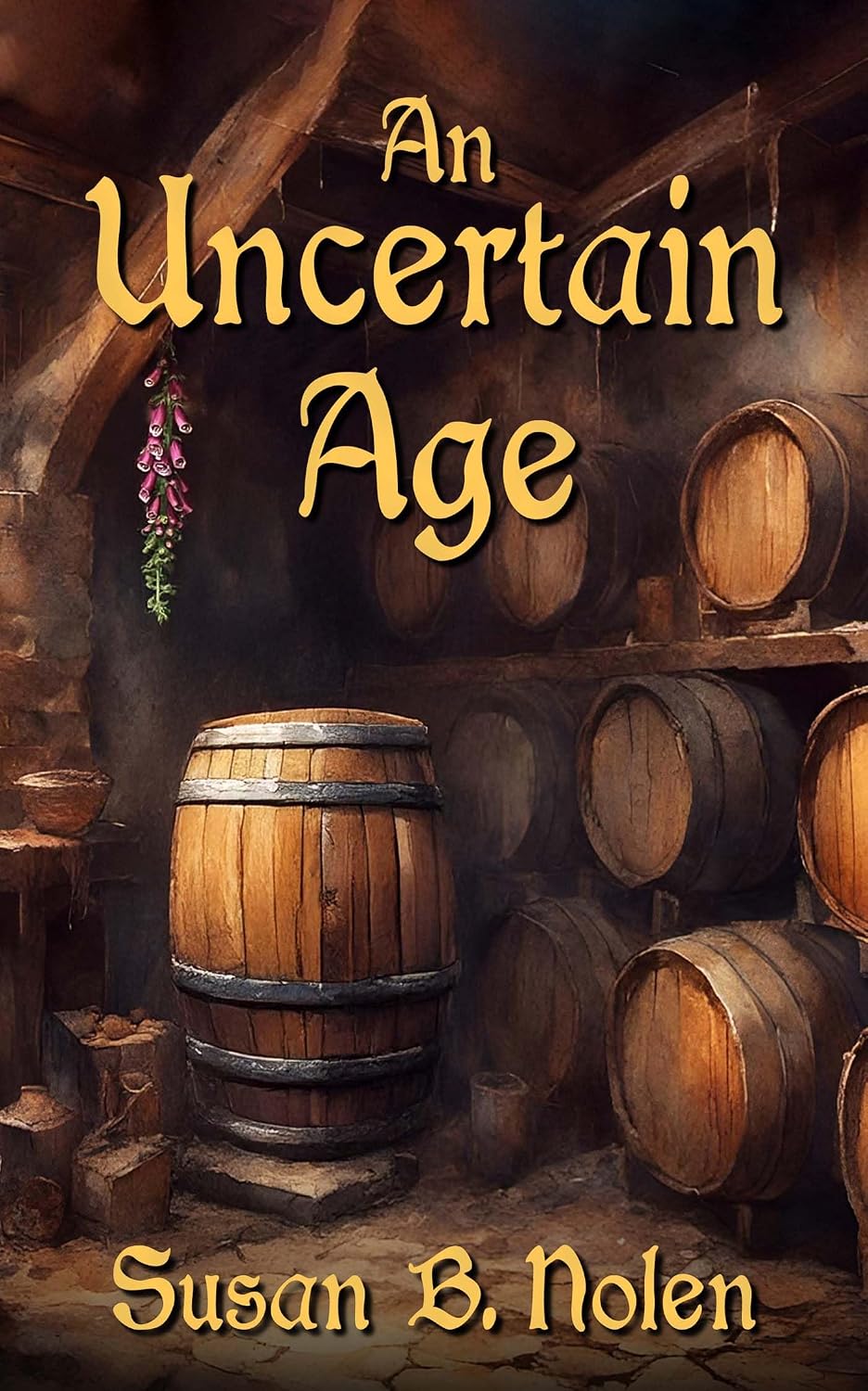
In a medieval village, a widow battles powerful men to retain control of her brewery and protect her found family.
Blurb:
The years following the Black Death were an age of uncertainty and opportunity. Newly widowed Margaret Surteys startles the village by taking over her husband’s brewery and seizing her only chance for independence, despite her advanced age and the opposition of the powerful Reeve. She also takes on her abandoned step-granddaughter, Agnes, who has plans of her own. As the business grows, Margaret, aided and exasperated by Agnes, must battle official pressures and a mysterious string of serious mishaps at the brewery. Suspecting organized sabotage and a link to more than one death, they hatch a scheme to catch the culprit, which ends in disaster. Margaret must risk her livelihood and newfound autonomy to save the child she has come to love.
Excerpt:
2 August, 1349; Thornham, Palatinate of Durham
Sometimes, Margaret Surteys had to admit, her age was an advantage. This afternoon, for example, while hawking ale to dirt-encrusted workmen down by the river. Foreigners, mostly, from north and south, come to build the bridge—which was, after a year and a half, starting to resemble one. All day, they’d shifted the great stones, piling block upon block to raise the piers in the thick August heat. Working up a powerful thirst. They’d no eyes for an old woman, cared only for the ale cask she trundled on her handcart and the dipper that filled their cups.
“Give us another, then, mistress,” shouted one burly fellow with enormous hands and dark, oily hair. The smell of stale sweat and stone dust made her eyes water.
“Sorry, lads,” she said, pulling the heavy cloth up over the keg. “That’s the lot.”
The workers grumbled and cursed, but gave her no real trouble. Had she been young and fair they might have pressed her for more than ale. But they’d not try that on, not for a crone with grizzled hair that might, long ago, have been the color of oak leaves in autumn. That left Margaret free to stuff their coin into her waiting purse instead of swatting away a groping, grimy hand. And she and Tobias needed every penny she could earn.
She flexed her stiff fingers, picked up the handles of her barrow, and started the push up from the riverside. Not what she’d imagined for herself after nearly fifty summers. Until last year, she’d been a Brewster, one of several village women crafting ale for family and neighbors. Back then she’d not appreciated the full measure of her husband’s grand plan.
Ah, Tobias’s plan. Well, and it had worked, after a fashion. He’d built them a brewhouse and made himself the Brewer. After a lean year, they were beginning to show a profit, becoming a serious rival to the Reeve, the most powerful man in the village, though they still walked the knife’s edge, tottering between security and ruin. And Margaret still missed being in charge, shepherding each small batch from roasted malt to final product. Now she was but Brewer’s wife, finding grain when supplies ran low or selling their surplus ale. And, of course, tending their sheep and other stock, and gardening, and spinning, and mending, and all.
But she’d no time to stand mulling her regrets. The manor had finally put in a large order that would earn enough to see them through to harvest-time, if only she could find enough wheat. If they could not supply the ale and lost their best customer to the Reeve, they might not be able to pay the installment on their debt. She must make sure that did not happen.
Buy links:
· Bookshop.org (softcover)
· Barnes & Noble (Nook & softcover).
· The Wild Rose Press (softcover) – this page also has all the buy links
· Amazon US and Amazon worldwide (Kindle & softcover)
· Apple Books (ebook)
· BooksAMillion (softcover)
About the Author:

Susan B. Nolen writes historical and contemporary suspense in a multigenerational, multispecies household in the wilds of western Washington. After years of studying and writing about identity and motivation in social context, she now writes novels and short stories about women making space for themselves in the world. It’s way more fun. An Uncertain Age is her debut novel.
Visit her at http//sbnolen.com, read her newsletter on Substack (https://substack.com/@sunolen), follow her at Bluesky (https://bsky.app/profile/sbnolen.com), Facebook (SB Nolen), and LinkedIn (Susan B. Nolen).


