
Category Archives: Promo Tips

Tuesday Two-Minute Writing Tip – Writing Back Cover Blurbs and Tag Lines

Got two minutes? Then check out this week’s quick tip ~ Sharing some articles about writing blurbs and tag lines…


Hello and welcome…I am a freelance editor and an editor for The Wild Rose Press, as well as an author. I often struggle with my own writing, and I have found that sometimes, a little reminder of ways to improve the process can be helpful, so, I like to share these moments of brilliance with others :). But, in this busy world of ours, who has time for pages and pages of writing tips? That’s why I’ve condensed mine down to quick flashes you can read in (approximately) two minutes. Enjoy…

TWoMinuteTip

Disclaimer: All of my tips are suggestions, and are only my opinion. And, for the most part, there are exceptions when going against my advice will make your story read better. Take what works, leave the rest.


Today’s post is going to be a bit of a cheat. I have been more crazy busy than usual these past few weeks, so I don’t have anything prepared. However, I am sharing a few links with you regarding writing blurbs and tag lines. I rely on these sites often, and they make something that is normally a torturous chore much easier. SO…without further ado…

********

This site is just a big long list of movie tag lines. But, reviewing the list helps to see the purpose of a tag line and helps to get my mind zeroed in on the important elements of a good tag line: Impact and brevity.

Movie Taglines from Tagline Guru

********

On this site, Janalyn Voigt shows how to break down your story in a handful of steps that lead to a great tag line. As a bonus, her steps for breaking down the story are helpful in getting to the crux of your novel, which is sometimes difficult (for me, at least). This site is so helpful, you might come up with too many taglines, which is great, because you can use them as promo teasers. 

Live Write Breathe: Cook up a Tantalizing Tagline for your book

********

And, finally, blurb writing. I have read several articles on this topic, but none have proved to be as thorough and helpful as this one. the author offers advice on blurbs based on genre, and even shows how to shorten them, along with some other handy tips. 

How to Write a Blurb (Back Cover Copy) by Marilynn Byerly

Please accept my apologies for my laziness. I hope you found these helpful. Do you have any ‘go to’ articles, about taglines, blurbs, or otherwise, you’d like to share?

Until next time…Happy Writing!

 ~*~*~*~*~*~*~*~*~*~*~*~*~*~*~*~*~*~*~*~*

NEW RELEASE – Now Available 

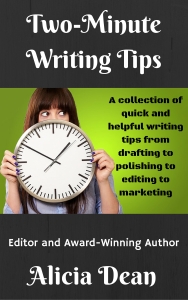
(Click on the cover to be taken to the Amazon Buy Page)
2 minute writing tip final


 ~*~*~*~*~*~*~*~*~*~*~*~*~*~*~*~*~*~*~*~*

*** If you would like to send me a few sample pages (around 7500 words or so, even though I will not edit that many on the blog. It just gives me more to choose from) for me to edit and share on an upcoming blog post, please do so in the body of an email to AliciaMDean@aol.com. Please use the subject line: “Blog Submission” This is for published or unpublished authors. In the email, please include whether you would like me to use your name or keep it anonymous, and whether or not you would like me to include any contact info or buy info for your books. Also, you can let me know if you would like for me to run my edits by you before posting on the blog. Please keep in mind, this is for samples to use for blog posts. I will not edit or use samples from all the submissions I receive, but I will use as many as possible. 

~*~*~*~*~*~*~*~*~*~*~*~*~*~*~*~*~*~*~*~*
16

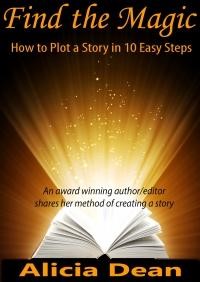
How to write a novel? That is the question. There are probably as many answers to that question as there are people who ask it.

Wanting to write and actually doing it are two very different things. I am well acquainted with the sometimes grueling process of churning out a story. Over the years, I have tried many methods for creating and completing manuscripts, and have tweaked and honed it down to a workable (for me) process.

Using specific examples from one of my own novels, Without Mercy, I share my method in this mini how to book. The first eight steps actually deal with plotting while the last two are designed to help expand your outline into a well-developed draft. There is no one, perfect way to create a story, but there will be a method, or methods that work for you. I’m not sure if this is the one, but it works for me. Only you can decide if it also works for you. Fingers crossed that it does!

*** Warning – Please do not purchase without reading a sample. (This is solid advice for any book, fiction or non. If you are not intrigued in the sample, you will likely not enjoy the book)

Amazon: Click Here

8 Comments

Filed under For Writers, Promo Tips, Tips from an Editor, Tuesday Two-Minute Tips

Tuesday Two-Minute Writing Tip – It’s Not Writer’s Block…It’s Writer’s Panic

Got two minutes? Then check out this week’s quick tip ~ How to get un-stuck when you’re stuck and can’t write.

Hello and welcome…I am a freelance editor and an editor for The Wild Rose Press, as well as an author. I often struggle with my own writing, and I have found that sometimes, a little reminder of ways to improve the process can be helpful, so, I like to share these moments of brilliance with others :). But, in this busy world of ours, who has time for pages and pages of writing tips? That’s why I’ve condensed mine down to quick flashes you can read in (approximately) two minutes. Enjoy…


TWoMinuteTip

Disclaimer: All of my tips are suggestions, and are only my opinion. And, for the most part, there are exceptions when going against my advice will make your story read better. Take what works, leave the rest.


I am under a deadline, an intense, terrifying deadline that I set for myself. I’ve been in similar situations, and I have always accomplished what I needed to. Right now, I’m not gaining as much ground as I would like. I know exactly what is going to happen in the last handful of scenes I need to write, but I can’t seem to get them down on paper. And I’m starting to panic. I even gave myself permission to write crappy, although I’m not sure myself is obeying my directive.

I have a list of tips for times like these, and I’m going to give them a shot. I’m sharing them today, just in case I’m not the only writer in the world who experiences Writing Panic/Anxiety/Block/Freezing. (Although, I actually suspect I AM the only one. I believe all other writers sit down at the computer (or at the paper with the pen), and flawless words flow like a river of magic from their fingertips…sigh…) 

Tips for un-sticking a stuck scene/writer’s brain:

  • Isolate the scene from the rest of the book. Open a new document and write the scene all on its own.
  • Write the scene like you’re telling a friend about it. If it helps, pretend like you’re telling a friend about a movie you saw. Write it crappy, conversationally. Just ‘tell’ what happened. You can polish and ‘show’ in revisions.
  • Write gibberish. Just string a bunch of nonsensical words together. Anything that comes to mind. Try this for 5 or 10 minutes. It can be quite freeing. And, writing is a muscle. The more you exercise it, the better it works.
  • Close your eyes, picture the scene, the setting, the characters, feel, smell, hear the scene…and spew out crap.  Total, poorly written crap.
  • Read something in the genre you’re writing (something brief, a scene or two, NOT an entire book). Try reading it aloud and/or typing/writing from the book (just remember to NOT use what you type in your story. That’s called plagiarism)
  • Take a scene (copy and paste from a word document) from one of your own books and type over it with the events in the new story. Reminding yourself you’ve done this before, and seeing how you were once able to get words on paper, can help jumpstart your brilliance again.
  • Write it like it’s the first scene in your book. We all know we take more care and time with our opening scenes. And when we are writing them, we are powerful, fearless, full of optimism and hope. The world is ours to command and nothing can stand in our way. (This is just before reality bites us in the arse, but it’s a good feeling while it lasts). Adopt that same attitude with each scene. (Not the biting in the arse attitude, the fearless one)
  • Say these words: “I am not a bad writer, I’m just having a bad time writing. I will push through it, keep writing, and it will all come together.”
  • Then, write. No matter how awful the writing is, or how hard it is to push the words out, keep writing.

What tricks do you use when you’re stuck? (Oh, wait…I’m the only one who ever gets stuck, I forgot.)

Until next time…Happy Writing!

 ~*~*~*~*~*~*~*~*~*~*~*~*~*~*~*~*~*~*~*~*

NEW RELEASE – Now Available 

(Click on the cover to be taken to the Amazon Buy Page)

2 minute writing tip final


 ~*~*~*~*~*~*~*~*~*~*~*~*~*~*~*~*~*~*~*~*

*** If you would like to send me a few sample pages (around 7500 words or so, even though I will not edit that many on the blog. It just gives me more to choose from) for me to edit and share on an upcoming blog post, please do so in the body of an email to AliciaMDean@aol.com. Please use the subject line: “Blog Submission” This is for published or unpublished authors. In the email, please include whether you would like me to use your name or keep it anonymous, and whether or not you would like me to include any contact info or buy info for your books. Also, you can let me know if you would like for me to run my edits by you before posting on the blog. Please keep in mind, this is for samples to use for blog posts. I will not edit or use samples from all the submissions I receive, but I will use as many as possible. 

~*~*~*~*~*~*~*~*~*~*~*~*~*~*~*~*~*~*~*~*

16

How to write a novel? That is the question. There are probably as many answers to that question as there are people who ask it.

Wanting to write and actually doing it are two very different things. I am well acquainted with the sometimes grueling process of churning out a story. Over the years, I have tried many methods for creating and completing manuscripts, and have tweaked and honed it down to a workable (for me) process.

Using specific examples from one of my own novels, Without Mercy, I share my method in this mini how to book. The first eight steps actually deal with plotting while the last two are designed to help expand your outline into a well-developed draft. There is no one, perfect way to create a story, but there will be a method, or methods that work for you. I’m not sure if this is the one, but it works for me. Only you can decide if it also works for you. Fingers crossed that it does!

*** Warning – Please do not purchase without reading a sample. (This is solid advice for any book, fiction or non. If you are not intrigued in the sample, you will likely not enjoy the book)

Amazon: Click Here

10 Comments

Filed under For Writers, Promo Tips, Tips from an Editor, Tuesday Two-Minute Tips

Tuesday Two-Minute Writing Tip – Avoid the “Dr. Evil” & “Scooby-Do” Suspense Techniques

Got two minutes? Then check out this week’s quick tip ~ Advice for writing genuine, realistic suspense.

Hello and welcome…I am a freelance editor and an editor for The Wild Rose Press, as well as an author. I often struggle with my own writing, and I have found that sometimes, a little reminder of ways to improve the process can be helpful, so, I like to share these moments of brilliance with others :). But, in this busy world of ours, who has time for pages and pages of writing tips? That’s why I’ve condensed mine down to quick flashes you can read in (approximately) two minutes. Enjoy…


TWoMinuteTip

Disclaimer: All of my tips are suggestions, and are only my opinion. And, for the most part, there are exceptions when going against my advice will make your story read better. Take what works, leave the rest.

I love suspense (and when I say suspense, I’m using it as an all-encompassing genre to include thrillers, mysteries, and police procedurals.) It’s my favorite genre to read and write. It’s also one of the most difficult, in my opinion. Writers have to be very careful about the way the crimes are presented, the way they are investigated, and how they are wrapped up.

Here are a few devices I see often and have probably done, although I try my best to avoid them:

1) The Scooby Doo Effect 

Remember in all the Scooby Doo cartoon episodes when the end comes and the criminal is busted, and he reveals all the details of his diabolical plan and says, “And I’d have gotten away with it too, if it weren’t for those meddling kids.”

This worked well in the cartoon, but it’s not a good device in writing suspense. You’ve seen it in books, I’m sure. That moment at the end when a killer is caught and confronted by the main character. The perpetrator explains his entire plan and motive in detail. While it might be necessary to show a brief explanation, it needs to be natural, and there needs to be a legitimate reason for the criminal to explain. Criminals are not as anxious to spill their guts as many books would have you to believe. Most are anxious to do two things; commit crimes and get away with them. If the actions of your villains show otherwise, you might want to rethink your scene. And, please when it’s necessary to have them explain pieces of the puzzle that your characters, and therefore readers, would have no other way of knowing, try to let it evolve naturally in the moment.

In a book I read recently—we’ll call it Book X because I don’t want to give the real title, and I’ll be using it in all my examples—at the end, the killer had the female detective captive, and he felt the need to brag to her, explicitly,  about how he pulled off the crime, and how he would still get away with it, once he disposed of her (that meddling detective), about how great it was to be so powerful and how his power and connections had allowed him the freedom to get by with those murders, and he went into great detail about all the players involved and their role in his scheme and his opinion on each. He basically outed himself as a narcissistic sociopath, and people rarely diagnose themselves like that. While all too typical, this type of ending scenario is unnecessary and unbelievable.

Here is a brief snippet from one of my novels. Details have been tweaked to prevent spoilers.

I drew the .22 from my jacket pocket and leveled it at him. “You’re insane. I want an answer, and I want it now. Otherwise, I put a bullet through your evil brain.”

His gaze went from the gun, up to my eyes, back to the gun, then settled on my face. The innocent mask fell. A touch of smugness came over his features. “I did it for you. For us.”

“What do you mean, for us?”

The now unguarded hazel eyes shone with maniacal glint. “Well, partly I took her to punish her dad and that blah, blah, blah, but I also figured I could use it as leverage.”

“Is she alive?” That was the burning question. Once I found out, I could proceed with trying to pick apart his demented mind and get the answers I needed.

“She’s fine. I couldn’t hurt her. Not knowing what she meant to you. I hoped I could convince you to go away with me if I promised to let the police know where she is. I was going to wait until we were far away from here before I told them. Until it was too late for you to change your mind.”

See, the bad guy has a good reason for revealing details. He’s trying to convince her to understand him and maybe to come away with him. And, I didn’t give a great deal of information. Just a few pieces.

2) Incognito Villains

This is when you want to show scenes from your villain’s point of view, but you do not wish to reveal their identity. This can be tricky, I’ll admit, and sometimes, it’s not easy to pull off. I definitely do not always succeed. One thing you definitely want to avoid is using a word when referring to the villain that makes it obvious you are trying to hide the identity. Words like, “The person,” “the shadow,” or even “the man” get tiresome and they make your scene unnatural and jarring. Sometimes, when not overdone, “the man” or “the woman” or “he” or “she” can work, but writers don’t always want to reveal the gender of their villain.

In Book X, the way the author presented scenes from the killer’s POV was to call him, or her, “the figure.” Trust me, this became annoying quickly. With lines such as… (these are not verbatim, but close):

The figure motioned the woman over to the car. She leaned in and gave the figure a sexy smile. She had no idea her life was about to end.

“Get in,” the figure said.

“Not so fast. We haven’t discussed rates.”

The figure’s grip on the steering wheel tightened. “I’ll pay whatever you want.” The figure had no intention of paying her a dime. She’d be dead before she could collect.

She winked and leaned in. The figure choked back the urge to gag at the smell of her cheap perfume.

Okay…so you get the idea. How distracting and annoying is that? I found myself thinking of ‘the figure’ in terms of the amount he would pay her, and making up jokes in my head. You do NOT want readers that distracted.

There are a few solutions, but as I said, they can be tricky. Especially if you want to hide the sex of the villain. The only solid solution I can think of for hiding gender is to write the villain POV scenes in first person. I know some authors dislike writing in first person and do not want to change from first to third points of view in various scenes. But, it’s probably the best way. See how much better this flows, and you do not know if the character is male or female:

I motioned the woman over to the car. She leaned in and gave me a sexy smile. She had no idea her life was about to end.

“Get in,” I said.

“Not so fast. We haven’t discussed rates.”

My grip on the steering wheel tightened. “I’ll pay whatever you want.” I had no intention of paying her a dime. She’d be dead before she could collect.

She winked and leaned in. I choked back the urge to gag at the smell of her cheap perfume.

You could also try giving the villain a nickname, but it would be difficult to hide when he or she appears in other scenes, where we DO know their identity, we just don’t know they are the killer. In one of my novels, I believe I pulled off the nickname thing successfully, since the ‘real’ name was only mentioned a few times in the story. And, if readers had thought hard enough about it, they might have connected. In another novel, I had my villain refer to himself as the fake name he gave when he approached young women. Therefore, in narrative, I could still call him by that name.

3) The Dr. Evil Plan – (please watch the below SHORT video)

This is funny, but it’s also pretty accurate in many suspense novels. Haven’t you read books where almost this exact thing happens? I know I have. Recently, in fact. Yes, it’s that Book X again (which, I might add, is a highly successful book, so I shouldn’t judge, but it did give me lots of material for a blog post, so judge I shall :))

In Book X, the killer has murdered 5 women, taken his time, and gleefully strangled and tortured them, reveling in watching the life fading from their eyes. At the end, when he is holding the female detective, along with the corpse of his sixth victim, he buckles the detective and the corpse into seat belts and sends the car into a water-filled quarry. Guess what? Help arrives, and the detective survives. Huh??? I’m not buying it. Why did he ‘Dr. Evil’ it and ‘assume all went according to plan’ rather than strangling her as well? He hated her, wanted her dead, had already made an attempt on her life, and she was the one who caught him. Sorry, but it just made no sense. This is a convenient, contrived device and readers find it annoying.

What I try to do in my suspense books is to make sure that there is a good reason for the killer to keep the main character alive, and sometimes show that it’s their MO (Mode of Operation), until I’ve figured out a way for my characters to get out of the mess they’re in. For example, in one of my books, the killer was exacting revenge against his wife who cheated and dumped him. With his other victims, he taunted and tormented them before killing them. When he had his cheating wife and her cheating new boyfriend held hostage at the end (and the main character stumbled onto the scene and was taken captive as well), he took time to screw with them and torment them to make them suffer. It wasn’t contrived, or at least I don’t think it was, because it made sense based on his history and his reasons for doing so.

So, while I must apologize that this tip was probably a bit longer than the promised two minutes, I feel these are important things to keep in mind in order to write a solid, believable suspense. The above devices are lazy and convenient ways to wrap up a case and reveal information to characters and readers, but these things cam be accomplished in much better ways.

Until next time…Happy Writing!

 ~*~*~*~*~*~*~*~*~*~*~*~*~*~*~*~*~*~*~*~*

NEW RELEASE – Now Available 

(Click on the cover to be taken to the Amazon Buy Page)

2 minute writing tip final


 ~*~*~*~*~*~*~*~*~*~*~*~*~*~*~*~*~*~*~*~*

*** If you would like to send me a few sample pages (around 7500 words or so, even though I will not edit that many on the blog. It just gives me more to choose from) for me to edit and share on an upcoming blog post, please do so in the body of an email to AliciaMDean@aol.com. Please use the subject line: “Blog Submission” This is for published or unpublished authors. In the email, please include whether you would like me to use your name or keep it anonymous, and whether or not you would like me to include any contact info or buy info for your books. Also, you can let me know if you would like for me to run my edits by you before posting on the blog. Please keep in mind, this is for samples to use for blog posts. I will not edit or use samples from all the submissions I receive, but I will use as many as possible. 

~*~*~*~*~*~*~*~*~*~*~*~*~*~*~*~*~*~*~*~*

16

How to write a novel? That is the question. There are probably as many answers to that question as there are people who ask it.

Wanting to write and actually doing it are two very different things. I am well acquainted with the sometimes grueling process of churning out a story. Over the years, I have tried many methods for creating and completing manuscripts, and have tweaked and honed it down to a workable (for me) process.

Using specific examples from one of my own novels, Without Mercy, I share my method in this mini how to book. The first eight steps actually deal with plotting while the last two are designed to help expand your outline into a well-developed draft. There is no one, perfect way to create a story, but there will be a method, or methods that work for you. I’m not sure if this is the one, but it works for me. Only you can decide if it also works for you. Fingers crossed that it does!

*** Warning – Please do not purchase without reading a sample. (This is solid advice for any book, fiction or non. If you are not intrigued in the sample, you will likely not enjoy the book)

Amazon: Click Here

15 Comments

Filed under For Writers, Promo Tips, Tips from an Editor, Tuesday Two-Minute Tips

Tuesday Two-Minute Writing Tip – Fabulous Ebook Contest – International Digital Awards

Got two minutes? Then check out this week’s quick tip ~ Enter your book in OKRWA’s IDA Contest for more exposure and a chance to win awesome prizes!

Hello and welcome…I am a freelance editor and an editor for The Wild Rose Press, as well as an author. I often struggle with my own writing, and I have found that sometimes, a little reminder of ways to improve the process can be helpful, so, I like to share these moments of brilliance with others :). But, in this busy world of ours, who has time for pages and pages of writing tips? That’s why I’ve condensed mine down to quick flashes you can read in (approximately) two minutes. Enjoy…

TWoMinuteTip

Disclaimer: All of my tips are suggestions, and are only my opinion. And, for the most part, there are exceptions when going against my advice will make your story read better. Take what works, leave the rest.

I am not feeling well today, plus, I am involved in the Candace Havens Fast Draft process with three of my writer friends, so my brain power is somewhat used up. 🙂 Instead of an actual tip, I thought I would tell you about a contest you should seriously consider entering. This is the fifth year OKRWA has hosted the International Digital Awards. I was one of the co-founders of the contest, and it has been quite successful for our chapter and for entrants.

Why should you enter? Let me tell you…

The IDA accepts Ebook entries in 7 different categories, both novel (40,000 words and above) and novella/short (10,000 to 39,999 words) lengths. Each entry is seen by three different readers, so even if you don’t place, you have the opportunity of reaching new readers.

The entry fee is low…$20 for novel length, $15 for novella/short length.

If you DO place, you receive a nice paper certificate and button for your website. Plus, your information goes up on our website.

If you WIN, you receive the following…

  • This awesome engraved paperweight (updated with YOUR info of course :)) **colors my vary

Novel Paperweight prize Short-Novella paperweight prize

  • You will be featured on a minimum of 3 blog posts

  • Your book will be featured in a “winner” video trailer that will be shared on FB, tweeted, and featured on at least 3 blogs and websites

  • Multiple Tweets and Facebook posts 

  • Featured on a special IDA Winners Pinterest Page

Why wouldn’t you want to enter??? 

Get those entries in soon…the deadline is June 30, 2016.

Detailed information on entering can be found here:

FMI: https://okrwa.com/contests/international-digital-awards/contest-categories/


Eligibility: Any ebook with an original copyright date of 2015 or 2016 that was eligible for sale in 2015 or 2016 and is NOT available for purchase in mass print by April 15, 2016 (Ebooks that are available as POD’s are eligible)

Entry: Non DRM PDF as email attachment

Categories: (All of the following offer BOTH a short/novella and a Novel category in each genre – Entries may contain romance, but romance is not required)

  • Contemporary

  • Erotica

  • Historical

  • Inspirational

  • Paranormal

  • Suspense

  • Young Adult

We need judges too! If you wish to judge, check out the information here: (You are free to judge, even if you enter, as long as you judge a category other than the one you enter)

https://okrwa.com/contests/international-digital-awards/judging-information/

Judges: Readers, including other unpublished and published authors.

Comments from past entrants:

  • This is an awesome contest! Not only did I receive recognition by winning the historical category, but I also received support in the form of tweets, Facebook posts and reviews from the judges. It was such an honor to have won such a prestigious contest. Thank you IDA! ~ Laurel O’Donnell, Award Winning Author of Angel’s Assassin

  • “Oh. My. Goodness! If there’s one contest you do not want to miss entering, it’s OKRWA’s International Digital Awards. As a winner in the 2013 IDA, I can honestly say that I have never gotten more bang for my contest buck than I have with the IDA: a website winner’s icon, a paperweight award, Facebook and Twitter promotion, reviews posted on Amazon and Goodreads by judges and IDA personnel along with Twitter and FB postings, plus a list of review links. Are you kidding me? No other contest does this and the icing on the cake? The IDA coordinators are AWESOME!! ~– Julie Lessman, award-winning author of The Daughters of Boston and Winds of Change series

  • “High praise for the International Digital Awards contest. Right on the mark with tons of terrific, highly-visible, effective promotions for winners.” ~Timothy Davis, author of SEA CUTTER

  • “What a wonderful contest! I’ve long admired the NRCA and read many of the winners. So glad OKRWA has created a digital award. The prize is mighty sweet as well. I appreciate the exposure to new digital readers that the IDA has given STONE KISSED.” ~Keri Stevens, author

  • “I am so glad that your hard-working chapter will continue with the International Digital Awards next year. I know it’s a lot of work — but so appreciated. Winning the IDA has been a thrill for me.” ~Cheryl Bolen, author of MY LORD WICKED

So…hurry up and get those entries in…best of luck!

Until next time…happy writing!

Oh yes, I wanted to share this boxed set, on sale for ONLY 99¢ – Six past IDA winners got together and released their winning stories in this boxed set. Genres include Contemporary Romance, Paranormal, Suspense, Historical,  and Young Adult. Check out it:

51UU92O-exL._SY331_BO1,204,203,200_

Amazon Buy Link: https://amzn.com/B01F9RHLE6

 ~*~*~*~*~*~*~*~*~*~*~*~*~*~*~*~*~*~*~*~*

NEW RELEASE – Now Available 

(Click on the cover to be taken to the Amazon Buy Page)

2 minute writing tip final


 ~*~*~*~*~*~*~*~*~*~*~*~*~*~*~*~*~*~*~*~*

*** If you would like to send me a few sample pages (around 7500 words or so, even though I will not edit that many on the blog. It just gives me more to choose from) for me to edit and share on an upcoming blog post, please do so in the body of an email to AliciaMDean@aol.com. Please use the subject line: “Blog Submission” This is for published or unpublished authors. In the email, please include whether you would like me to use your name or keep it anonymous, and whether or not you would like me to include any contact info or buy info for your books. Also, you can let me know if you would like for me to run my edits by you before posting on the blog. Please keep in mind, this is for samples to use for blog posts. I will not edit or use samples from all the submissions I receive, but I will use as many as possible. 

~*~*~*~*~*~*~*~*~*~*~*~*~*~*~*~*~*~*~*~*

16

How to write a novel? That is the question. There are probably as many answers to that question as there are people who ask it.

Wanting to write and actually doing it are two very different things. I am well acquainted with the sometimes grueling process of churning out a story. Over the years, I have tried many methods for creating and completing manuscripts, and have tweaked and honed it down to a workable (for me) process.

Using specific examples from one of my own novels, Without Mercy, I share my method in this mini how to book. The first eight steps actually deal with plotting while the last two are designed to help expand your outline into a well-developed draft. There is no one, perfect way to create a story, but there will be a method, or methods that work for you. I’m not sure if this is the one, but it works for me. Only you can decide if it also works for you. Fingers crossed that it does!

*** Warning – Please do not purchase without reading a sample. (This is solid advice for any book, fiction or non. If you are not intrigued in the sample, you will likely not enjoy the book)

Amazon: Click Here
1 Comment

Filed under For Writers, Promo Tips, Tips from an Editor, Tuesday Two-Minute Tips

Tuesday Two-Minute Writing Tips – Characters Who Talk to Themselves

Got two minutes? Then check out this week’s quick tip ~ Advice on using a character’s first person, internal thoughts sparingly.

Hello and welcome…I am a freelance editor and an editor for The Wild Rose Press, as well as an author. I often struggle with my own writing, and I have found that sometimes, a little reminder of ways to improve the process can be helpful, so, I like to share these moments of brilliance with others :). But, in this busy world of ours, who has time for pages and pages of writing tips? That’s why I’ve condensed mine down to quick flashes you can read in (approximately) two minutes. Enjoy…


TWoMinuteTip

Disclaimer: All of my tips are suggestions, and are only my opinion. And, for the most part, there are exceptions when going against my advice will make your story read better. Take what works, leave the rest.

It’s easy to fall into the trap of allowing your characters to talk to themselves too frequently, especially when you are trying to write in ‘Deep POV.’ However, deep POV doesn’t really mean using a lot of italicized first person thoughts. You can write in deep POV by connecting with a character’s emotions and avoiding filter words. But, if you have characters talk to themselves too often, it can be distracting and make your characters seem a bit unstable. 🙂

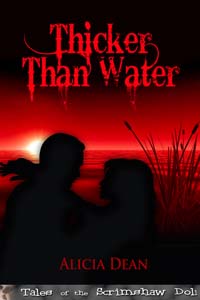
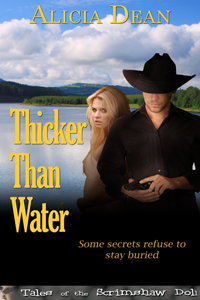
Here are some examples from my short story, Thicker than Water (I’m using this as an example as an excuse to share my new cover, which I love…see below):

This is Julia’s POV:

“Julia?” The voice came from her right, and even before she turned, she recognized the owner. No way could she mistake the smooth, deep baritone, tinged with that slight Okie drawl. A sound that had always reminded her of honey oozing over a warm biscuit.

Jake Devlin.

Heart threatening to explode from her chest, she inhaled, then exhaled a slow, steady breath, before she turned to face him. Somehow, he seemed taller than she remembered. He wore cowboy boots and a battered Stetson with a chocolate-brown uniform shirt tucked into blue jeans.

That felt pretty much like deep POV, don’t you think? We could feel what she felt, we knew her emotions. I might have been tempted to write it like this:

“Julia?” The voice came from her right, and even before she turned, she recognized the owner. No way could I mistake the smooth, deep baritone, tinged with that slight Okie drawl. It has always reminded me of honey oozing over a warm biscuit.

Jake Devlin.

My heart is going to explode from my chest. Breathe, in, out, slow and steady. She turned to face him. He’s taller than I remember.  He wore cowboy boots and a battered Stetson with a chocolate-brown uniform shirt tucked into blue jeans.

Here is a scene from Jake’s POV. For some reason, male characters talking to themselves seems worse that female. Probably because, normally, men don’t talk that much anyway.

Normally, watching the Sox take the Yankees down would have Jake riveted to the television, but he could barely concentrate. All he could think about was Julia.

How could he even be around her with the burden of the secret he carried?

Knowing the truth would crush her. Not telling her would damn him to an eternity of torment. He owed her the truth. The truth would kill her.

Back and forth, his thoughts circled and collided with one another. He needed to solve this damned case, so she’d get the hell out of town. That way, he wouldn’t be forced to hold back any secrets. He could carry it all on his own.

Doesn’t that work better than if I’d done this?

Normally, watching the Sox take the Yankees down would have Jake riveted to the television, but he could barely concentrate. All I can think about is Julia.

How can I even be around her with the burden of the secret I’m carrying?

Knowing the truth will crush her. Not telling her will damn me to an eternity of torment. You owe her the truth. The truth will kill her.

Back and forth, his thoughts circled and collided with one another. I need to solve this damned case, so she’ll get the hell out of town. That way, I won’t be forced to hold back any secrets. I can carry it all on my own.

So, can you see how you can write a scene with internal thoughts, yet not have them first person, italicized thoughts, which can be a little distracting?

And now, for my revised cover for Thicker than Water…First, the previous one:

11. THICKER THAN WATER 8.12

The new one…

perf5.000x8.000.indd

What do you think? Better? I modeled my hero after Raylan Givens from Justified, and I think this cover captures him much better.

Until next time…happy writing!

 ~*~*~*~*~*~*~*~*~*~*~*~*~*~*~*~*~*~*~*~*

NEW RELEASE – Now Available (and still 99 cents for a brief time!!!)

(Click on the cover to be taken to the Amazon Buy Page)

2 minute writing tip final


 ~*~*~*~*~*~*~*~*~*~*~*~*~*~*~*~*~*~*~*~*

*** If you would like to send me a few sample pages (around 7500 words or so, even though I will not edit that many on the blog. It just gives me more to choose from) for me to edit and share on an upcoming blog post, please do so in the body of an email to AliciaMDean@aol.com. Please use the subject line: “Blog Submission” This is for published or unpublished authors. In the email, please include whether you would like me to use your name or keep it anonymous, and whether or not you would like me to include any contact info or buy info for your books. Also, you can let me know if you would like for me to run my edits by you before posting on the blog. Please keep in mind, this is for samples to use for blog posts. I will not edit or use samples from all the submissions I receive, but I will use as many as possible. 

~*~*~*~*~*~*~*~*~*~*~*~*~*~*~*~*~*~*~*~*

16

How to write a novel? That is the question. There are probably as many answers to that question as there are people who ask it.

Wanting to write and actually doing it are two very different things. I am well acquainted with the sometimes grueling process of churning out a story. Over the years, I have tried many methods for creating and completing manuscripts, and have tweaked and honed it down to a workable (for me) process.

Using specific examples from one of my own novels, Without Mercy, I share my method in this mini how to book. The first eight steps actually deal with plotting while the last two are designed to help expand your outline into a well-developed draft. There is no one, perfect way to create a story, but there will be a method, or methods that work for you. I’m not sure if this is the one, but it works for me. Only you can decide if it also works for you. Fingers crossed that it does!

*** Warning – Please do not purchase without reading a sample. (This is solid advice for any book, fiction or non. If you are not intrigued in the sample, you will likely not enjoy the book)

Amazon: Click Here
4 Comments

Filed under For Writers, Promo Tips, Tips from an Editor, Tuesday Two-Minute Tips

Tuesday Two-Minute Writing Tip/Vent – Sometimes, Even the Big Guns Misfire

Got two minutes? Then check out this week’s quick…rant ~  Recurring missteps by famous, successful authors…

Hello and welcome…I am a freelance editor and an editor for The Wild Rose Press, as well as an author. I often struggle with my own writing, and I have found that sometimes, a little reminder of ways to improve the process can be helpful, so, I like to share these moments of brilliance with others :). But, in this busy world of ours, who has time for pages and pages of writing tips? That’s why I’ve condensed mine down to quick flashes you can read in (approximately) two minutes. Enjoy…

TWoMinuteTip

Disclaimer: All of my tips are suggestions, and are only my opinion. And, for the most part, there are exceptions when going against my advice will make your story read better. Take what works, leave the rest.

Rather than ‘tips,’ per se, I just want to point out/vent a little about how lesser known authors, especially Indy authors, are held to such high standards and picked apart for every little error. Yet, almost every time I read a book, even by the most successful and well-known authors, I am pulled out of the story by errors and poorly executed prose. I know that being an author and editor myself, I notice things the average reader doesn’t but I just have to think, these writers are in the big time, can’t they put a little more care and finesse into their work? (Having said all of that, I am WELL aware that my writing is far from excellent and error-free, but I admit it, own it, am still working to improve, and I am not a millionaire NYT best-selling author).

I won’t name names, but I would like to share some issues I’ve found with some of the recent books I’ve read…

The first one is a suspense by a male author that I LOVE, and I am usually captivated by his books.

Problem 1:

The main character (we’ll call her Suzie), made it clear, early in the book, pretty much on the first page, that she thought very little of her former brother-in-law (her dead sister’s husband), and his fathering capabilities. As a matter of fact, when BIL offers his condolences over the death of Suzie’s husband, and asks if there is anything he can do, she has the thought, you can take better care of your children

Then, at the end of the book, Suzie plans to sacrifice her life in order to bring murderers to justice. Before she dies, she sets it up so BIL will be the one to raise her two-year-old daughter. HUH???? He sucks as a parent, yet HE is the one to whom you entrust your daughter?

Problem 2:

I’ve noticed this with a lot of the ‘big’ guys and gals…distant writing. I’ll give you a few examples. We’ll call Suzie’s daughter Shelly. And we’ll call Suzie’s friend Mark. In a scene where Mark was holding Shelly in his arms, and we are in Suzie’s POV, we have this narrative:

The little girl laid her head on Mark’s shoulder…

(I’m thinking…the little girl??? Wait, I thought he was holding Shelly. You know, your daughter, who you know quite well, well enough not to refer to her as ‘the little girl’)

And another line:

Shelly looked at her mother…

(Wait, I thought YOU were her mother)

This sort of thing appeared several times in another book I read recently by one of my favorite male authors. The MC had a teenaged daughter (who was a BRAT, by the way), and we are in her father’s POV. Lines like this appeared regularly:

Brittney seldom listened to her father.

(Yeah, well, she seldom listens to you either!)

Problem 3:

(There were actually several plot holes, in my opinion, implausible actions, etc, but I won’t go into all that, I’ll just focus on one issue in particular.) This sort of thing really bothers me, although many authors seem to think it’s okay…

Cheating the reader. DON’T do it!!! In this case, the book starts out at the funeral of Suzie’s husband who had been shot by thugs when she and her husband were at a park together a few nights earlier. The ENTIRE book is in Suzie’s POV. We go through this big long mystery and cat and mouse kind of thing, several interviews with the police, etc, etc, her internal thoughts about the night the murder happened, about her marriage, her daughter, about what’s going on now and who and why it’s happening, etc, etc. Well, guess what we find out at the end of the story? SHE killed her husband. On purpose. Shot him down. Dead. In the entire book, not once did her internal thoughts wander to that little bit of information. That’s not a twist, it’s a major cheat. Since she knew she killed her husband, and we were privy to her thoughts during the entire book, at least ONE of those thoughts should have been about how she KILLED her husband! Am I right?

Problem 4:

Something minor, but it still didn’t sit right with me. She is speaking with a detective who is asking her some questions that indicate he’s a little suspicious of her. They are discussing the weapon that killed her husband, and she says, “Are you familiar with revolvers, Detective?” And he says, “No.” and she goes on to explain the difference between revolvers and semi-automatics, or something like that. Uh, I’m sorry, but a seasoned homicide detective who isn’t familiar with revolvers?? Nope, not buying it. (She is a former soldier, so she was an expert…on everything.)

Another book by a female author who has published a series of probably 20 books about this same MC (and the MC is very unlikable, BTW, I couldn’t finish Book 1, I wanted to punch her the whole time, and I figured that probably wasn’t very healthy)

Anyway, this MC is a woman who worked closely with the police, frequently, and for years, and her best friend is a detective and she is literally THE BEST in her field, that was made painfully and repeatedly obvious. Someone violently vandalized her studio. The perpetrator killed her neighbor’s cat and smeared cat blood all over the destroyed room. The cat’s body was still there. She calls the police, then while waiting for them, she takes the cat’s body over to its owner. REALLY???? You are so intelligent and know everything about the law, yet you removed a vital piece of evidence–and, technically, the VICTIM–from a crime scene?

Okay, I’m done. Sorry. I don’t mean to be critical, and I don’t know if anyone will learn anything from this, but it was on my mind. And now it’s off my chest, so I feel better. 🙂

Until next time…happy writing!

 ~*~*~*~*~*~*~*~*~*~*~*~*~*~*~*~*~*~*~*~*

NEW RELEASE – Now Available 

(Click on the cover to be taken to the Amazon Buy Page)

2 minute writing tip final


 ~*~*~*~*~*~*~*~*~*~*~*~*~*~*~*~*~*~*~*~*

*** If you would like to send me a few sample pages (around 7500 words or so, even though I will not edit that many on the blog. It just gives me more to choose from) for me to edit and share on an upcoming blog post, please do so in the body of an email to AliciaMDean@aol.com. Please use the subject line: “Blog Submission” This is for published or unpublished authors. In the email, please include whether you would like me to use your name or keep it anonymous, and whether or not you would like me to include any contact info or buy info for your books. Also, you can let me know if you would like for me to run my edits by you before posting on the blog. Please keep in mind, this is for samples to use for blog posts. I will not edit or use samples from all the submissions I receive, but I will use as many as possible. 

~*~*~*~*~*~*~*~*~*~*~*~*~*~*~*~*~*~*~*~*

16

How to write a novel? That is the question. There are probably as many answers to that question as there are people who ask it.

Wanting to write and actually doing it are two very different things. I am well acquainted with the sometimes grueling process of churning out a story. Over the years, I have tried many methods for creating and completing manuscripts, and have tweaked and honed it down to a workable (for me) process.

Using specific examples from one of my own novels, Without Mercy, I share my method in this mini how to book. The first eight steps actually deal with plotting while the last two are designed to help expand your outline into a well-developed draft. There is no one, perfect way to create a story, but there will be a method, or methods that work for you. I’m not sure if this is the one, but it works for me. Only you can decide if it also works for you. Fingers crossed that it does!

*** Warning – Please do not purchase without reading a sample. (This is solid advice for any book, fiction or non. If you are not intrigued in the sample, you will likely not enjoy the book)

Amazon: Click Here

12 Comments

Filed under For Writers, Promo Tips, Tips from an Editor, Tuesday Two-Minute Tips

Tuesday Two-Minute Writing Tip – Miscellaneous Tips You Can’t Live Without

Got two minutes? Then check out this week’s quick tip ~ A handful of editing, writing, and marketing tips to make your life easier…

Hello and welcome…I am a freelance editor and an editor for The Wild Rose Press, as well as an author. I often struggle with my own writing, and I have found that sometimes, a little reminder of ways to improve the process can be helpful, so, I like to share these moments of brilliance with others :). But, in this busy world of ours, who has time for pages and pages of writing tips? That’s why I’ve condensed mine down to quick flashes you can read in (approximately) two minutes. Enjoy…

TWoMinuteTip

Disclaimer: All of my tips are suggestions, and are only my opinion. And, for the most part, there are exceptions when going against my advice will make your story read better. Take what works, leave the rest.

Here are a few things I’ve learned along the way that have been helpful to me, and I’m hoping they will be to you also…

Writing Habit:

I know it’s very difficult to carve out writing time each day. Writers need a large chunk of time to be ‘in the zone’ and undisturbed. However, if you want to work toward a habit of writing each day, try to make yourself write one paragraph a day. The advantages are…

  • At least you’re writing SOMETHING, and a trickle can become a stream
  • You might be surprised at how much more than just that one paragraph you are able to write
  • If you’re like me and you have scene notes but don’t have a good handle on exactly how the scene will play out, writing a paragraph about what you DO know can serve as a placeholder and when you go back later, your scene might flow. Or you might determine it should be cut. Either way, you can resolve that particular scene. If you keep doing this, you can build a nice outline for your novel

‘Word’ tips:

I’m sure you’ve all seen those squiggly blue and red lines that indicate, according to ‘Word,’ you’ve made a booboo? Did you know that there is an option where you can actually be taken to each of these potential errors? Under ‘Review’ you should see an option for ‘ABC ✔ Spelling and Grammar.’ If you click on that, it will take you to each instance of errors and you will have the option to correct them or ignore. It doesn’t find ALL typos and mistakes, but it finds many.

Word also has a ‘Compare’ function in the Review section that comes in handy if you can’t recall which version of two documents is the most recent, or if, for any reason, you wish to compare the differences in two documents. Once you click on ‘compare’ it’s self-explanatory.

Facebook and Twitter:

When you draft a Facebook post, before actually posting, you can delete the actual link and just leave the content and image to make your post look a bit ‘cleaner’ and the option to click on where the link leads will remain in your post.

You can schedule posts  to your ‘page’ ahead of time on Facebook. Once you draft a post, click on the arrow next to ‘publish’ found beneath your content box. An option for scheduling will come up. You can schedule a week’s worth of posts at one sitting.

You can embed tweets for sharing rather than screen-shotting them. Beneath your tweet, you will see the … option. If you click on that, one of the options that comes up is to ’embed’ your tweet. Copy and paste that link.

If you wish to share a link for a Facebook post or a Tweet, you can get a direct link by clicking on the time/day of the post/tweet. A new page will come up that will contain the direct link in the search bar. Copy and paste. This is handy if you want to ask others to share a tweet or post for you, or if you want to, say post a link from your fan page into your profile page, etc.

That’s it for now…just a few little bite-sized tips. Hope you find them useful!

Until next time…happy writing!

 ~*~*~*~*~*~*~*~*~*~*~*~*~*~*~*~*~*~*~*~*

NEW RELEASE – Now Available 

(Click on the cover to be taken to the Amazon Buy Page)

2 minute writing tip final


 ~*~*~*~*~*~*~*~*~*~*~*~*~*~*~*~*~*~*~*~*

*** If you would like to send me a few sample pages (around 7500 words or so, even though I will not edit that many on the blog. It just gives me more to choose from) for me to edit and share on an upcoming blog post, please do so in the body of an email to AliciaMDean@aol.com. Please use the subject line: “Blog Submission” This is for published or unpublished authors. In the email, please include whether you would like me to use your name or keep it anonymous, and whether or not you would like me to include any contact info or buy info for your books. Also, you can let me know if you would like for me to run my edits by you before posting on the blog. Please keep in mind, this is for samples to use for blog posts. I will not edit or use samples from all the submissions I receive, but I will use as many as possible. 

~*~*~*~*~*~*~*~*~*~*~*~*~*~*~*~*~*~*~*~*

16

How to write a novel? That is the question. There are probably as many answers to that question as there are people who ask it.

Wanting to write and actually doing it are two very different things. I am well acquainted with the sometimes grueling process of churning out a story. Over the years, I have tried many methods for creating and completing manuscripts, and have tweaked and honed it down to a workable (for me) process.

Using specific examples from one of my own novels, Without Mercy, I share my method in this mini how to book. The first eight steps actually deal with plotting while the last two are designed to help expand your outline into a well-developed draft. There is no one, perfect way to create a story, but there will be a method, or methods that work for you. I’m not sure if this is the one, but it works for me. Only you can decide if it also works for you. Fingers crossed that it does!

*** Warning – Please do not purchase without reading a sample. (This is solid advice for any book, fiction or non. If you are not intrigued in the sample, you will likely not enjoy the book)

Amazon: Click Here

5 Comments

Filed under For Writers, Promo Tips, Tips from an Editor, Tuesday Two-Minute Tips

Tuesday Two-Minute Writing Tip – Quick Characterization Tips

Got two minutes? Then check out this week’s quick tip ~ A few things to remember when creating characters…

Hello and welcome…I am a freelance editor and an editor for The Wild Rose Press, as well as an author. I often struggle with my own writing, and I have found that sometimes, a little reminder of ways to improve the process can be helpful, so, I like to share these moments of brilliance with others :). But, in this busy world of ours, who has time for pages and pages of writing tips? That’s why I’ve condensed mine down to quick flashes you can read in (approximately) two minutes. Enjoy…

TWoMinuteTip

Disclaimer: All of my tips are suggestions, and are only my opinion. And, for the most part, there are exceptions when going against my advice will make your story read better. Take what works, leave the rest.

Characterization is not my strength. I’m more of a plot-driven writer, but I realize that the two are equally important. (Some feel that characterization is the most important, but without a strong plot, I’m not going to give a rat’s behind about your character, regardless of how interesting they might be) So, I am trying to remind myself of ways to make my characters more real, more vivid. Characterization is much more than physical description, and even background or favorite foods and music. Of course, there are a multitude of things you can do to flesh out your characters–character profiles, interviews, charts, etc. I’m not going into that much detail, but I do have a few suggestions (things that I need to remember myself)…

  1. Give your characters, mainly your MC (Main Character aka Protagonist) and your villain, a quirk, a certain way of speaking, etc. Maybe give them a catch phrase or a habit like chewing on a straw. Also, give them strange little quirks, such as an aversion to slimy foods or a fear of birds or have them like something that others would find odd, such as the taste of castor oil or give them an irrational hatred of something (such as, for me, I can’t STAND the Muppets). Little things like this can make your character more alive in your own mind, and therefore,  you will more likely project them in a more vivid way in your story.
  2. This has been drilled into our heads over and over, but it bears repeating. Give your MC flaws and your villain at least one admirable quality. I have difficult giving my characters flaws that are still relatable/understandable/sympathetic. I find it easier to give my villains a positive trait. Weird, right? I’ve often been told that readers found it easier to relate to my villains than my protagonists. NOT a good thing. I am working on changing that though. 🙂

What do you think? What are some elements of character you feel are important?

Until next time…happy writing!

 ~*~*~*~*~*~*~*~*~*~*~*~*~*~*~*~*~*~*~*~*

NEW RELEASE – Now Available 

(Click on the cover to be taken to the Amazon Buy Page)

2 minute writing tip final


 ~*~*~*~*~*~*~*~*~*~*~*~*~*~*~*~*~*~*~*~*

*** If you would like to send me a few sample pages (around 7500 words or so, even though I will not edit that many on the blog. It just gives me more to choose from) for me to edit and share on an upcoming blog post, please do so in the body of an email to AliciaMDean@aol.com. Please use the subject line: “Blog Submission” This is for published or unpublished authors. In the email, please include whether you would like me to use your name or keep it anonymous, and whether or not you would like me to include any contact info or buy info for your books. Also, you can let me know if you would like for me to run my edits by you before posting on the blog. Please keep in mind, this is for samples to use for blog posts. I will not edit or use samples from all the submissions I receive, but I will use as many as possible. 

~*~*~*~*~*~*~*~*~*~*~*~*~*~*~*~*~*~*~*~*

16

How to write a novel? That is the question. There are probably as many answers to that question as there are people who ask it.

Wanting to write and actually doing it are two very different things. I am well acquainted with the sometimes grueling process of churning out a story. Over the years, I have tried many methods for creating and completing manuscripts, and have tweaked and honed it down to a workable (for me) process.

Using specific examples from one of my own novels, Without Mercy, I share my method in this mini how to book. The first eight steps actually deal with plotting while the last two are designed to help expand your outline into a well-developed draft. There is no one, perfect way to create a story, but there will be a method, or methods that work for you. I’m not sure if this is the one, but it works for me. Only you can decide if it also works for you. Fingers crossed that it does!

*** Warning – Please do not purchase without reading a sample. (This is solid advice for any book, fiction or non. If you are not intrigued in the sample, you will likely not enjoy the book)

Amazon: Click Here

22 Comments

Filed under For Writers, Promo Tips, Tips from an Editor, Tuesday Two-Minute Tips

Tuesday Two-Minute Writing Tip – How to Give Your Sentences More Punch

Got two minutes? Then check out this week’s quick tip ~ Backload your sentences with powerful words to give them more impact

Hello and welcome…I am a freelance editor and an editor for The Wild Rose Press, as well as an author. I often struggle with my own writing, and I have found that sometimes, a little reminder of ways to improve the process can be helpful, so, I like to share these moments of brilliance with others :). But, in this busy world of ours, who has time for pages and pages of writing tips? That’s why I’ve condensed mine down to quick flashes you can read in (approximately) two minutes. Enjoy…

TWoMinuteTip

Disclaimer: All of my tips are suggestions, and are only my opinion. And, for the most part, there are exceptions when going against my advice will make your story read better. Take what works, leave the rest.

One of the tricks to adding more tension, more impact and punch to your writing is to use the powerful words toward the end of sentences, and especially to paragraphs and scenes.

Here are a few examples from some of my books:

Caster’s Unfriendly Ghost:

“Not only will I continue to screw with you, even on the job, but I’ll appear to Emily, tell her about our little scheme. What do you think she’ll think of you then?”

“You’re bluffing. You wouldn’t hurt her like that.”

Joey shook his head and closed his eyes. When he opened them, they were suspiciously damp. “I don’t want to. But I’ll do anything to keep her from making the biggest mistake of her life.”

Caster let out a resigned sigh and shook his head. “Nah, getting mixed up with the two of us was the biggest mistake of her life.”

Weaker:

Caster let out a resigned sigh and shook his head. “Nah, the biggest mistake of her life was getting mixed up with the two of us.”

Without Mercy:

Did you hear about that?” Stacy asked. “A couple gunned down in a Java Hut. Apparently a sniper. No one knows why. They still haven’t caught the guy.”

The others joined in on the discussion, but China remained silent. The waitress, a perky blonde wearing black shorts and a tight white shirt, brought over another pitcher of beer. “Guy over in the corner sent this to you.”

China’s gaze followed where the girl pointed, and the knot in her stomach froze. Royce. She hadn’t noticed him before, because his table was nestled in a dark corner. He smiled and lifted his glass in a silent salute. Her jaw tightened, and she clenched her glass so hard she thought it would shatter.

Weaker:

Her jaw tightened, and she nearly shattered the glass in her fist.

Lady in the Mist:

I shrugged as though my interest were casual curiosity. From his reaction, Sebastian did know her—and either didn’t like her, or liked her a great deal. “Just curious. I heard she broke up with Drew, then left town. That it’s possible she’s missing?”

“She’s missing, all right.” The words came out strained. “Maybe dead.”

A chill raced over my skin. “Dead?”

The anger in his eyes faded, replaced with something that looked suspiciously like pain. “I don’t know.”

Weaker:

The anger in his eyes faded, and something that looked suspiciously like pain replaced it. “I don’t know.”

It’s actually very simple, and we probably do it instinctively, for the most part. But, it doesn’t hurt to be aware as you’re making a pass through your manuscript,. Try to arrange wording for the most pizzazz.  Just think of it as ‘saving the best for last.’ 🙂

Until next time…happy writing!

 ~*~*~*~*~*~*~*~*~*~*~*~*~*~*~*~*~*~*~*~*

NEW RELEASE – Now Available 

(Click on the cover to be taken to the Amazon Buy Page)

2 minute writing tip final


 ~*~*~*~*~*~*~*~*~*~*~*~*~*~*~*~*~*~*~*~*

*** If you would like to send me a few sample pages (around 7500 words or so, even though I will not edit that many on the blog. It just gives me more to choose from) for me to edit and share on an upcoming blog post, please do so in the body of an email to AliciaMDean@aol.com. Please use the subject line: “Blog Submission” This is for published or unpublished authors. In the email, please include whether you would like me to use your name or keep it anonymous, and whether or not you would like me to include any contact info or buy info for your books. Also, you can let me know if you would like for me to run my edits by you before posting on the blog. Please keep in mind, this is for samples to use for blog posts. I will not edit or use samples from all the submissions I receive, but I will use as many as possible. 

~*~*~*~*~*~*~*~*~*~*~*~*~*~*~*~*~*~*~*~*

16

How to write a novel? That is the question. There are probably as many answers to that question as there are people who ask it.

Wanting to write and actually doing it are two very different things. I am well acquainted with the sometimes grueling process of churning out a story. Over the years, I have tried many methods for creating and completing manuscripts, and have tweaked and honed it down to a workable (for me) process.

Using specific examples from one of my own novels, Without Mercy, I share my method in this mini how to book. The first eight steps actually deal with plotting while the last two are designed to help expand your outline into a well-developed draft. There is no one, perfect way to create a story, but there will be a method, or methods that work for you. I’m not sure if this is the one, but it works for me. Only you can decide if it also works for you. Fingers crossed that it does!

*** Warning – Please do not purchase without reading a sample. (This is solid advice for any book, fiction or non. If you are not intrigued in the sample, you will likely not enjoy the book)

Amazon: Click Here

7 Comments

Filed under For Writers, Promo Tips, Tips from an Editor, Tuesday Two-Minute Tips

Tuesday Two-Minute Writing Tip – Learning from Stephen King

Got two minutes? Then check out this week’s quick tip ~ Advice from the Master

Hello and welcome…I am a freelance editor and an editor for The Wild Rose Press, as well as an author. I often struggle with my own writing, and I have found that sometimes, a little reminder of ways to improve the process can be helpful, so, I like to share these moments of brilliance with others :). But, in this busy world of ours, who has time for pages and pages of writing tips? That’s why I’ve condensed mine down to quick flashes you can read in (approximately) two minutes. Enjoy…

TWoMinuteTip

Disclaimer: All of my tips are suggestions, and are only my opinion. And, for the most part, there are exceptions when going against my advice will make your story read better. Take what works, leave the rest.

Whether or not you have read, or enjoy, Stephen King’s writing, you can no doubt benefit from his wisdom. While I did not love every one of his books, I can easily say, I’ve loved MOST of them, and of all the authors I’ve read, regardless of how well they write, none is the ‘storyteller’ that Stephen King is. Actually, the word ‘teller’ is misleading (and can be a bit frightening as a writer, when we’ve had it hammered into us to ‘show’ not ‘tell’ – but trust me, this is a different kind of ‘telling’), because when you’re a brilliant storyteller, the reader is swept along on a journey, immersed in the story to the point that they forget they are reading. And that is the highest form of ‘showing.’

Some of my favorite tips from Stephen King:

Don’t use passive voice. “Timid writers like passive verbs for the same reason that timid lovers like passive partners. The passive voice is safe. The timid fellow writes “The meeting will be held at seven o’clock” because that somehow says to him, ‘Put it this way and people will believe you really know. ‘Purge this quisling thought! Don’t be a muggle! Throw back your shoulders, stick out your chin, and put that meeting in charge! Write ‘The meeting’s at seven.’ There, by God! Don’t you feel better?”

Avoid adverbs. “The adverb is not your friend. Consider the sentence “He closed the door firmly.” It’s by no means a terrible sentence, but ask yourself if ‘firmly’ really has to be there. What about context? What about all the enlightening (not to say emotionally moving) prose which came before ‘He closed the door firmly’? Shouldn’t this tell us how he closed the door? And if the foregoing prose does tell us, then isn’t ‘firmly’ an extra word? Isn’t it redundant?” Avoid adverbs, especially after “he said” and “she said.” “While to write adverbs is human, to write ‘he said’ or ‘she said’ is divine.”

But don’t obsess over perfect grammar. “Language does not always have to wear a tie and lace-up shoes. The object of fiction isn’t grammatical correctness but to make the reader welcome and then tell a story… to make him/her forget, whenever possible, that he/she is reading a story at all. “

Leave out the boring parts and kill your darlings. “Mostly when I think of pacing, I go back to Elmore Leonard, who explained it so perfectly by saying he just left out the boring parts. This suggests cutting to speed the pace, and that’s what most of us end up having to do (kill your darlings, kill your darlings, even when it breaks your ecgocentric little scribbler’s heart, kill your darlings.)”

Write primarily for yourself. Write what you love. Love what you write. King says, “I did it for the pure joy of the thing. And if you can do it for joy, you can do it forever.”

Tell stories about what people actually do. “Bad writing is more than a matter of shit syntax and faulty observation; bad writing usually arises from a stubborn refusal to tell stories about what people actually do — to face the fact, let us say, that murderers sometimes help old ladies cross the street. The people in your stories are what readers care about the most, so make sure you acknowledge all the dimensions your characters may have.”

Write every single day. “Once I start work on a project, I don’t stop, and I don’t slow down unless I absolutely have to. If I don’t write every day, the characters begin to stale off in my mind … I begin to lose my hold on the story’s plot and pace.”

If you do not write consistently and visit your story, your characters, day after day, you will lose your enthusiasm, your connection. As King describes it, this is  “the smooch of death.” No matter how little time you have, write SOMETHING on your story daily, even if it’s just a paragraph, or as King says, “one word at a time.” This is something I need to practice myself, and believe me when I say, I do not. With a full-time non-writing job, editing for The Wild Rose Press, freelance editing, promo, side projects, spending time with family, etc, I have little spare time, and I do not devote enough to my writing, but I vow to change that immediately. 🙂 (Many of the tips I share on my blog are meant for me as much, or more than, for anyone else. I certainly need to ‘practice what I preach.’)


What do you think of these tips? Which is your favorite? Are there any that you need to apply?

(If you haven’t read ‘On Writing’ I highly recommend it. Not only does it offer a great deal of writing advice, it also offers a look into the fascinating life of King. You can find it here:  ON WRITING)

Until next time…happy writing!

 ~*~*~*~*~*~*~*~*~*~*~*~*~*~*~*~*~*~*~*~*

NEW RELEASE – Now Available – Only a few more days at 99¢! (I know I keep saying this, but I really mean it this time…the sale price ends this Friday, April 29th) 🙂

(Click on the cover to be taken to the Amazon Buy Page)

2 minute writing tip final

I have released an e-book with a collection of Two-Minute Tips I have shared on my blog. Now, you can have them in one convenient place for easy reference. sale price is 99¢ – Regular price will be $2.99.

 ~*~*~*~*~*~*~*~*~*~*~*~*~*~*~*~*~*~*~*~*

*** If you would like to send me a few sample pages (around 7500 words or so, even though I will not edit that many on the blog. It just gives me more to choose from) for me to edit and share on an upcoming blog post, please do so in the body of an email to AliciaMDean@aol.com. Please use the subject line: “Blog Submission” This is for published or unpublished authors. In the email, please include whether you would like me to use your name or keep it anonymous, and whether or not you would like me to include any contact info or buy info for your books. Also, you can let me know if you would like for me to run my edits by you before posting on the blog. Please keep in mind, this is for samples to use for blog posts. I will not edit or use samples from all the submissions I receive, but I will use as many as possible. 

~*~*~*~*~*~*~*~*~*~*~*~*~*~*~*~*~*~*~*~*

*** Find the Magic is FREE through Tomorrow, April 6th!! Click HERE 

16

How to write a novel? That is the question. There are probably as many answers to that question as there are people who ask it.

Wanting to write and actually doing it are two very different things. I am well acquainted with the sometimes grueling process of churning out a story. Over the years, I have tried many methods for creating and completing manuscripts, and have tweaked and honed it down to a workable (for me) process.

Using specific examples from one of my own novels, Without Mercy, I share my method in this mini how to book. The first eight steps actually deal with plotting while the last two are designed to help expand your outline into a well-developed draft. There is no one, perfect way to create a story, but there will be a method, or methods that work for you. I’m not sure if this is the one, but it works for me. Only you can decide if it also works for you. Fingers crossed that it does!

*** Warning – Please do not purchase without reading a sample. (This is solid advice for any book, fiction or non. If you are not intrigued in the sample, you will likely not enjoy the book)

Amazon: Click Here

22 Comments

Filed under For Writers, Promo Tips, Tips from an Editor, Tuesday Two-Minute Tips