
Please help me welcome today’s guest, Jill Arlene Culiner…
Please tell us a little about yourself. Where are you from? Where do you live now? Pets?
Hello Alicia. I was born in New York and raised in Toronto, but I was one of those kids who ran away from home at seventeen. I’ve lived in many countries—England, Turkey, Greece, Hungary, Germany, Holland—and now live in a 400-year-old former inn in a small village (population: 450) in the west of France. My wild garden is a classified wildlife protection area; therefore, my three rescue cats have to stay indoors (which they don’t mind at all). Even my huge rescue dog is a wuss who prefers staying inside and getting lots of hugs.
Where did you get the idea for Words for Patty Jo? Are your characters based on real people, or did they all come from your imagination?
Patty Jo’s story was a girl I went to school with. She was beautiful and gentle, but she had a terrible family. In order to escape, she made bad choices. Years later, I decided I had to write about her and give her a different life story. The same is true for David, the other main character in the book. I knew him well—he was the sort of idealistic person who believed that education and kindness would change the world. Of course, both Patty Jo and David are fictional characters, very different from the originals. Both are composites of many people I’ve met; their stories, although taken from real life, are those of others.
How did you come up with the title?
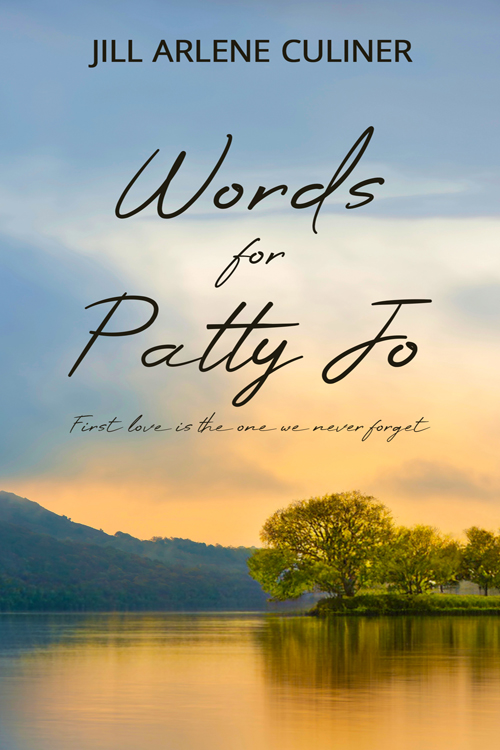
That was easy. In the beginning, Patty Jo is a shy, secretive girl who never answers a direct question and hates talking about herself. Years later, David, her former boyfriend, begins writing a short story about her, and he gives it the very appropriate title, Words for Patty Jo.
What genre have you never written that you’d like to write?-
I’ve written romances, mysteries and creative non-fiction travel books, but this is my first Women’s/General Fiction book. However, Words for Patty Jo can also slip into the Literary Fiction category because of the style, language, and theme.
How much of the book is realistic?
I would say pretty well all of it is realistic. I’ve told other people’s stories, singled out those who have been courageous enough to change their destiny.
Have you written any other books that are not published?
Many. They are sitting snug in my computer and getting dusty. Words for Patty Jo was one of those forgotten, pushed-aside manuscripts. I began it twenty years ago, then gave up and filed it away. Why? Because I had no idea what it was. Twelve years later, I looked at it again and began to see its possibilities. I completed a first draft, but still didn’t believe in it, so it went to sleep for a few more years.
Two years ago, I dusted it off, inspected it. By now, I was a more experienced, disciplined writer, and I finally understood how this story had to be written. After that, it became an obsession. I needed powerful images; I wanted beauty, and reality, and rebellious, wonderful characters. Therefore, I re-wrote every single chapter many times, went over and over the manuscript until each paragraph sang.
Do you have another occupation other than writer? If so, what is it and do you like it?
I am a social critical artist. I create satirical scenes of daily life in little boxes. I also draw caricatures. My house and my work can be seen here: https://www.jill-culiner.com
Is there a message in your novel that you want readers to grasp?
Patty Jo and David first meet in the late 1960s, but they don’t see each other again until forty years later. Thus, Words for Patty Jo is not strictly a romance. The main themes are social class, the search for identity, and personal courage.
Blurb:
A passion for books creates a lasting bond between teenage Patty Jo and David, but small-town prejudice and social differences doom their romance.
After a summer of reading and falling in love, David heads for university, foreign adventure, and a dazzling career; Patty Jo marries slick, over-confident Don Ried.
Yet plans can go horribly wrong. The victim of her violent husband, Patty Jo abandons her home and children to live on the streets of Toronto. David, a high-ranking executive in Paris, is dismayed by the superficiality of corporate success.
Forty years later, Patty Jo and David meet again. Both have defied society; both have fulfilled their dreams. And what if first love was the right one after all, and destiny has the last word?
Excerpt:
Together they cross Main, turn the corner. It’s hot on the back streets, away from the lake breeze. Stuffy hot. Tar oozes from sidewalk cracks; front yard sprinklers send out iridescent rainbow mists, dampen their legs as they pass, perfume the air with wet green. What he wants to do right now is run through those shimmery cascades, leap like a little kid because he’s sky high, walking a beautiful blonde home on a sunny summer afternoon.
Of course, at eighteen, if you walk down the road with a girl who makes you tingle, you can’t be childish, ruin everything by hopping around and cheering.
“Why do you have to go home?”
She raises tense, square shoulders. “Why? Because it’s four thirty. I have to be there by four thirty.”
Which isn’t much of an explanation. Perhaps she has a date. Perhaps she has a boyfriend, is waiting for the phone to ring.
“Because?” He holds his breath.
“Ma and Pa will raise hell if I’m not.”
That’s all? Except the sentence, the whispery voice, both beg answers. From the corner of his eye, he watches the way she moves. Likes it. An unusual stride, loose-hipped, swinging. Infinitely appealing. The tallish, slender frame, those jutting hip bones, the strong shoulders held back—all suggest a hidden force. As does the defiant way she carries her head.
“And where do you live?” she asks in an indifferent tone, one that belies the question mark. They are crossing over at Waverley where the houses get smaller: stucco framed by old cars and junk heaps, fronted by sagging porches with pitted paint.
“Riddle Lane,” he says, his answer as short as hers. He’s not proud of his address at the moment. True, he’s never really thought about the swanky house set into the trees with its separate servant’s wing, herb garden, three-car garage, the sandstone embellished by white ceramic bricks—all definite signs of luxury. Now, here on Waverley, he’s apologetic, almost ashamed.
For the first time, he wishes he, too, were on his way home at four o’clock, returning to one of these modest bungalows where parents are “Ma” and “Pa” and bicycles are propped against drooping fences, or plunked on cement driveways. It’s what? Homey? Relaxed? Or is he imagining a harmony that doesn’t exist?
https://books2read.com/PattyJo
https://wildrosepress.com/product/words-for-patty-jo/
About the Author
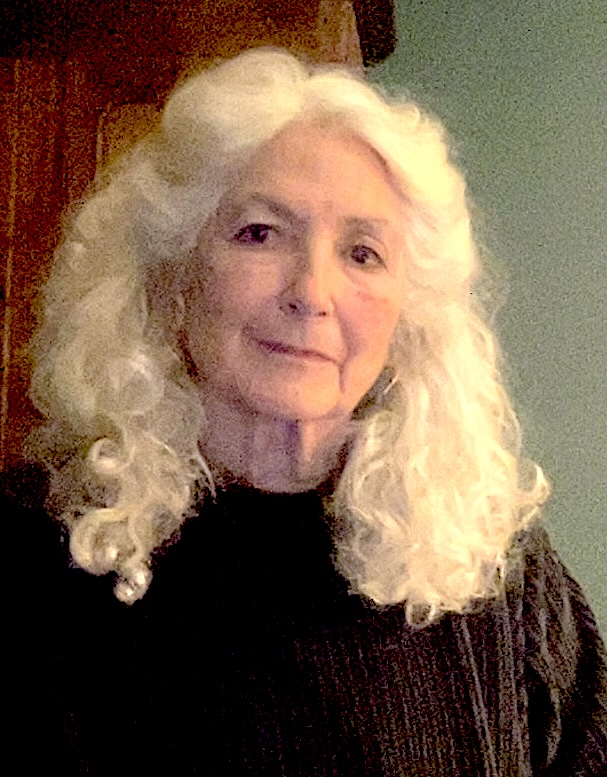
Writer, social critical artist, and impenitent teller of tall tales, Jill (J. Arlene) Culiner has crossed much of Europe on foot, lived in a mud house on the Great Hungarian Plain, in a Bavarian castle, a Turkish cave dwelling, a haunted house on the English moors, and beside a Dutch canal. She now resides in a 400-year-old former inn in a French village of no interest where, much to local dismay, she protects spiders, snakes, and weeds. Observing people everywhere, she eavesdrops on all private conversations and delights in any nasty, funny, ridiculous, sad, romantic, or boastful story. And when she can’t uncover salacious gossip, she makes it up.
She has won the 2005 Tanenbaum Prize in Canadian Jewish History, the 2024 Canadian Jewish Literary Award for Memoir, and was shortlisted for the Foreward Magazine Prize and twice for the Page Turner Awards.
Author Website http://www.j-arleneculiner.com
Storytelling Podcast: https://soundcloud.com/j-arlene-culiner
Author links: https://linktr.ee/j.arleneculiner

 Author Alicia Dean
Can’t say this isn’t an interesting interview, Jill and Alicia. with your background, Jill, it’s obvious your book is going to be an entertaining read and the blurb and excerpt suggest the same. Thank you. Meryl Brown Tobin
LikeLike
Thank you for your comment, Meryl. I hope it does fulfil its promise.
LikeLike