
Please welcome today’s guest, Marianne Plunkert…
Please tell us a little about yourself, where are you from? Where do you live now? Family? Pets?
I was born and raised in a small town in Ohio, but I have lived in numerous other states during my adulthood: Virginia, Washington, Oklahoma, New York, Texas, Colorado, Florida, and now North Carolina. In addition, my husband and I lived on a sailboat and sailed around the eastern Caribbean for three years after we retired.
I have two sons by my first 20-year-long marriage, and I inherited two bonus sons and two bonus daughters with my second marriage. All the children were adults when we got married, but we were both graciously accepted into each other’s family. Unfortunately, my husband passed away in 2022, before What Might Have Been had been accepted for publication.
Where did you get the idea for What Might Have Been?
Actually, the title came to me after I had finished writing the book. It is a question asked by one of the protagonists toward the end of it. I wished afterwards I had done some research first. As it turns out, there are several books currently on the market with the same title, some fiction, some non-fiction.
Why did you choose this genre (is it something you’ve written in before)? Was there anything unusual, any anecdote about this book, the characters, title, process, etc, you’d like to share?
When I was a little girl, I was enthralled by stories of my paternal great-grandfather. He grew up on a Virginia plantation, and his family owned slaves. As the story goes, when he was five years old, he saw his father tie his black Mammy to a tree and beat her for some unknown offense. He said he loved his black Mammy as much as he loved his own mother and vowed then and there that if he could ever help the slaves, he would. And so, when the Civil War broke out, he joined the Union forces while his father and brothers fought for the South.
I had always wanted to write a novel that included this bit of family history, so that pretty much defined the genre I would be writing in. As it happened, I was never interested in history per se; I was a cram-and-flush kind of student, so that was going to make it difficult. However, when my career took me to Colorado, I became intrigued with the rich history of the area. Having grown up in Ohio, I had no idea the War had extended that far west, and I had never heard of the Indian uprisings taking place in the western region of the country at the very same time. I joined the Colorado Historical Society (now called History Colorado), and the plot for my novel spilled forth from the articles I read in their publications. This said, not being a history buff to begin with meant I had to do a lot of research even after I began writing.
Do you have another occupation, other than writer? If so, what is it and do you like it?
I had another occupation prior to retiring early to pursue my lifelong dream of writing a novel and having it published. I was a teacher. I began teaching math at the secondary level, went on to get an MBA with a finance emphasis, and ended up teaching finance to both undergraduate and graduate students at a few major universities. I really enjoyed both the students and the scheduling flexibility that career offered. I actually began writing What Might Have Been while I was on the faculty at the University of Colorado at Denver. The problem was that major publishing companies were hiring me to review, edit, and write finance textbooks as an independent contractor, and that was money in the bank—which paid the bills!
What is your favorite quote?
“In the depth of winter, I finally learned that within me there lay an invincible summer.” ~Albert Camus
I find that inspiring on so many levels.
What is the toughest criticism given to you as an author? What has been the best compliment?
When I submitted the first several pages of my manuscript to my publisher, The Wild Rose Press, the editor to whom it was assigned replied with a number of unexpected criticisms. One of my undergraduate majors was English, and I had taken two post-graduate creative writing courses, so I wasn’t expecting any grammatical-type issues. As it happens, she taught me more in her semi-rejection letter than I had learned in all those courses.
She told me I was going to bore my readers to death with my sentence atructure: subject/verb, subject/verb, subject/verb, etc. She also sent me a list of things to avoid, such as the unnecessary use of the word “that,” among other things. She said if I wanted to make the recommended changes to my entire document, I could resubmit those first several pages for her to reevaluate. Otherwise, she suggested I might go with another publisher or choose to self-publish.
I opted to make the edits, and I could see how much improvement even the most minor changes made. I resubmitted those first several pages, and the editor was extremely impressed. (The first word of her responding email was, “Wow!”) I was given the go-ahead to submit my entire manuscript, and the rest is history—or, to be more specific, a historical romance. 😊
It’s hard to choose between two of what I consider the best compliments. The vast majority of reviewers, both on and off Amazon, have said the book is hard to put down. Several others have told me it reminds them of a Hallmark movie.
Are your characters based off real people or did they all come entirely from your imagination?
The hero’s background is based on my great-grandfather’s story, but I have no knowledge of his personality, or even his appearance. Some of the characters have a certain physical trait, such as a lazy eye, similar to an actual person I met at some point in my life. Otherwise, they are based solely on my imagination.
What do your friends and family think of your writing?
I’m really amazed at how well-received this first novel has been! By the time I had edited and reedited it and reedited it, I wasn’t sure it was any good at all. Regardless, I had it in mind to be a “one and done,” but numerous friends and family members have told me I must write a sequel. I doubt they would go so far as to say that if they truly didn’t think it was good. And reviews from people I don’t know at all have been equally positive.
Is there a message in your novel that you want readers to grasp?
While the storyline takes place over 150 years ago, many of the problems the characters face are similar to the ones people face today, as are their ingrained biases. As she proceeds on her journey, Melissa discovers that good and bad cannot be defined by race, color, or gender and that her initial perception of something or someone isn’t always accurate. I would hope a lot of my readers recognize this.
How much of the book is realistic?
The majority of it. I took great pains to ensure that the details I provided were historically accurate. I even researched the etymology of some of the words and phrases my characters used to be certain they would have been used in 1864 in the western territories. (Did you know that the word “grocer” in 1864 referred to a drinking establishment?)
How did your interest in writing originate?
I’ve been writing almost my entire life. My older sister taught me to write my name in cursive before I turned five. Over the years, I have written poetry and short stories, but my lifelong dream was always to write a novel and have it published.
Who is your favorite author and what is it that really strikes you about their work?
Elizabeth Goudge. She’s not a household name, and I think most of her books are out of print now, but when I read The Child From The Sea, her historical romance about the secret wife of Charles II, I could almost smell the salty sea air. What a gift!
Thank you for joining me today…I enjoyed the interview. Now, please tell us about your book…
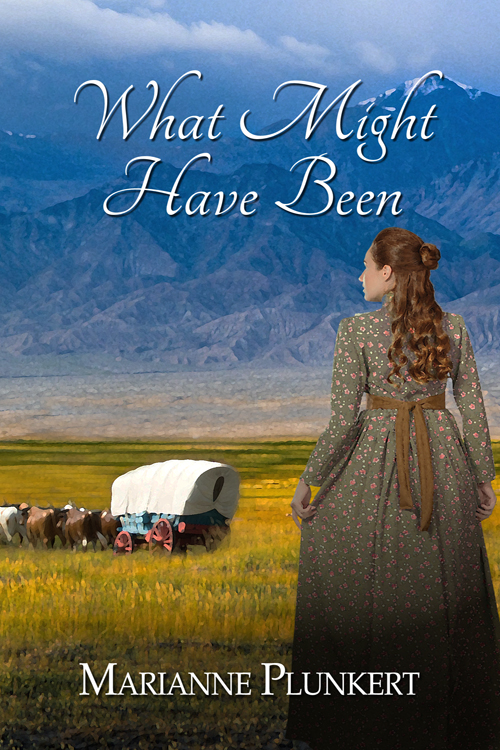
Two strangers fleeing their demons. One war-torn frontier that will change them forever.
Excerpt:
A full week had passed since Nat and Melissa were rescued. After loading Nat into a wagon, Alston, Watson Calhoune, and a couple of the calvary, including a medical doctor, accompanied them back to the fort. The remaining calvary attacked the Indian village, burning their teepees in much the same way as the Indians had burnt the wagons. Melissa had heard the soldiers boasting that they had caught the savages by surprise and that most of the braves had been with the village when they had attacked that night. Mrs. Avery had been killed by one of the Indians as she ran screaming toward the rescuers. Melissa wondered about the fate of the old squaw who had taken care of her and the younger woman who had ordered her brother to let Melissa go. Were the white men any kinder in their attack than the Indians had been? Had they spared the women and children? Somehow, she doubted it, and the words of the young Indian woman echoed in her ears. Perhaps all men were savages, regardless of their color, in the throes of battle. The whites were fighting to protect their own as they attempted to make their homes in this wild country. At the same time, the Indians were fighting to protect their lands from the white invasion. And things were hardly better back east where people purported to be more civilized. There, whites fought against whites, brothers and fathers against brothers and fathers. She had heard the rumors of plantations being burned and women raped by the Union soldiers. Horrors of what befell northern women when the rebels gained ground in a battle had not escaped her ears either. While Melissa did not believe in slavery and she had not quite understood it when she had heard her father talking about how the Southern states claimed they were fighting for something called “states’ rights,” she wondered if anything was worth all the bloodshed. Everything had seemed so simple less than a year ago. The North was right; the South was wrong. The whites were righteous in driving the savages from the land they had always inhabited; the savages were, after all, a dirty, inhuman bunch—closer to beasts, really. Such were the beliefs with which she grew up. But the young Indian woman had given her back her freedom, even if out of a sense of repayment for another good deed. Now nothing seemed so black and white anymore.
Buy links:
Amazon: https://a.co/d/3wtHBSI
Barnes and Noble: https://www.barnesandnoble.com/w/what-might-have-been-marianne-plunkert/1146512932?ean=9781509259939
Walmart: https://www.walmart.com/ip/What-Might-Have-Been-Paperback-9781509259939/14379455714?classType=REGULAR&from=%2Fsearch&sid=77ac533c-acc2-4339-8035-a0a14627fd0b
Booksamillion: https://www.booksamillion.com/p/What-Might-Been/Marianne-Plunkert/9781509259939
About the Author:
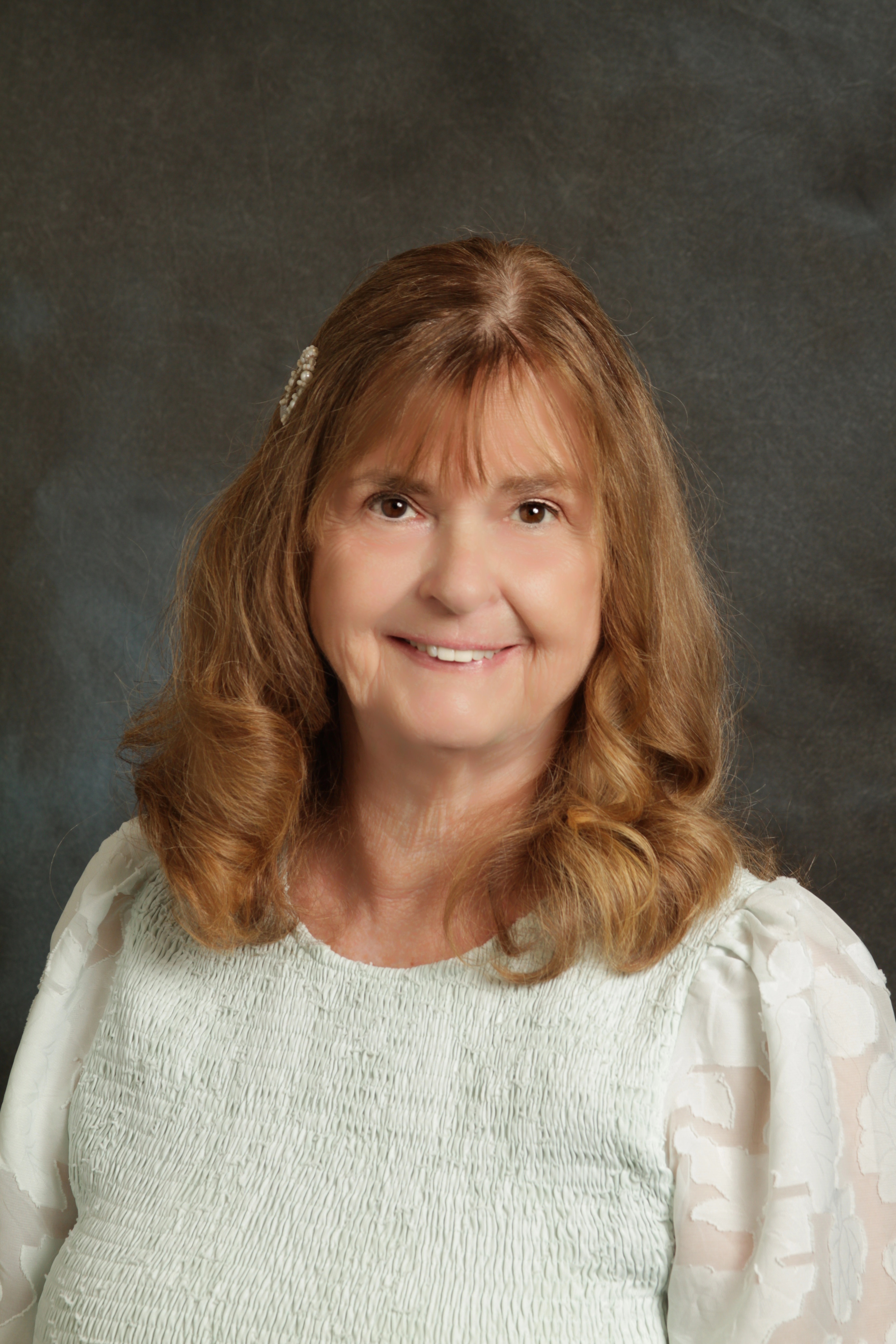
After spending 25 years in academia, teaching finance and authoring finance textbooks as an independent contractor for major publishing companies, Marianne retired early to devote more time to her lifelong dream: writing a novel and having it published. What Might Have Been, her debut novel, was inspired by the rich history of the Denver, Colorado, area she discovered while living there. She currently resides in western North Carolina and enjoys hearing from her readers. Connect with her through her website: https://marianneplunkert.wixsite.com/marianneplunkert-4.
You can also find her on the following social media sites:
Facebook: https://www.facebook.com/share/1A2qZXqCGm/
X: www.x.com/marianneP2024
Linkedin: www.linkedin.com/in/marianne-plunkert-56720450/
Instagram: Instagram.com/mplunkertauthor

 Author Alicia Dean
Good to read such an informative and entertaining top interview about an author and the background and introduction to her book, thanks, Marianne and Alicia. Meryl Brown Tobin
LikeLike